

Korean Beef Recipe That Delivers Bold Flavors in Minutes

Korean beef recipe fans know there's something special about bold, savory flavors that make dinner feel like an occasion worth celebrating.
Busy weeknights become instantly more exciting when you can pull together something that tastes like it came from a restaurant but requires minimal fuss in the kitchen.
The balance of sweet and salty notes creates an addictive quality that keeps everyone coming back for seconds, and sometimes thirds.
What makes this dish so appealing is how quickly it comes together while still delivering impressive results that feel far more complex than the effort required.
Whether served over rice, tucked into lettuce wraps, or piled onto noodles, the versatility means it fits seamlessly into any meal plan.
Families love how approachable yet satisfying it is, turning an ordinary evening into something memorable without requiring advanced cooking skills.
The aroma alone is enough to draw everyone to the table faster than usual.
Sweet-Savory Reasons to Love Korean Beef
Ingredient Breakdown for Korean Beef
What Tools Cook Korean Beef
Step-by-Step Method for Korean Beef
Whip Up the Marinade
Grab a medium bowl and toss in 1/2 cup soy sauce, 1/4 cup brown sugar, 2 tablespoons sesame oil, and 2 tablespoons rice wine vinegar. Add 1 tablespoon minced garlic, 1 tablespoon grated ginger, 1/2 teaspoon black pepper, and 1/4 teaspoon red pepper flakes. Whisk everything together until the sugar disappears completely.
Slice the Meat
Take your 1.5 lbs of ribeye and slice it super thin – we’re talking about 1/8 inch thick strips. Pro tip: stick the meat in the freezer for 30 minutes to make slicing easier. Cut against the grain for the most tender bites.
Marinate and Chill
Dump your beef into a large zip-top bag or shallow dish. Pour the marinade over the meat, making sure every single piece gets coated. Toss in your thinly sliced onion for extra flavor. Seal it up and park in the refrigerator for 30 minutes to 4 hours.
Prep for Cooking
Pull the marinated beef out of the fridge and let it hang out at room temperature for 15-20 minutes. This helps it cook more evenly.
Fire Up the Pan
Heat a large skillet over medium-high heat. Add a tablespoon of oil – vegetable or sesame both work great.
Sear the Meat
Carefully lay the marinated beef into the hot pan. Don’t crowd the meat – give each piece some breathing room. Cook in batches if needed.
Create the Perfect Sear
Let the beef cook for 2-3 minutes on each side. You’re looking for a nice brown color and fully cooked meat. The marinade will start to thicken into a delicious sauce.
Handle the Sauce
If the sauce gets too thick or starts to burn, splash in a bit of water to thin it out. Easy fix!
Serve and Garnish
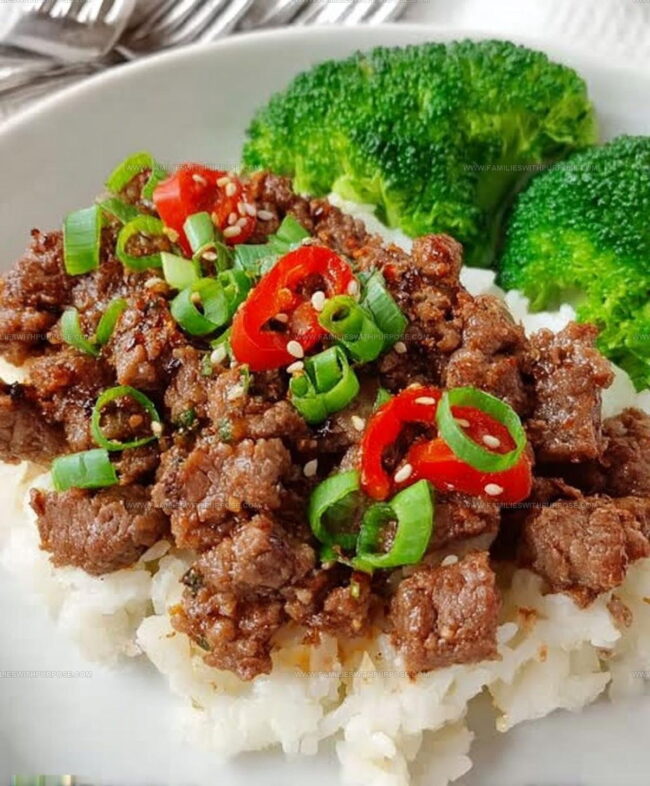
Pile the beef over some steamed rice. Sprinkle 2 sliced green onions and 1 tablespoon of sesame seeds on top. Grab some stir-fried veggies on the side if you’re feeling extra hungry.
Which Tips Balance Korean Beef Flavor
Which Korean Beef Variations Are Most Popular
How to Serve Korean Beef Hot and Fresh
How to Store Korean Beef for Meal Prep
Korean Beef Common Questions
Can I use a different cut of beef?
Absolutely! Sirloin, flank steak, or ribeye work perfectly. Choose a tender cut that slices easily and has some marbling for extra flavor.
How thin should I slice the beef?
Aim for paper-thin strips around 1/8 inch thick. Partially freezing the meat for 30 minutes makes slicing much easier and more precise.
Is this marinade spicy?
The red pepper flakes add a mild kick, but you can adjust the heat level by adding more or less. For zero heat, skip the pepper flakes completely.
What if I don’t have rice wine vinegar?
Regular white vinegar or apple cider vinegar make great substitutes. The goal is to add a tangy brightness to your marinade.
Can I make this dish ahead of time?
Marinate the beef up to 4 hours before cooking. Prep everything in advance and cook quickly when ready to serve for a super fast meal.
Do I need a special type of pan?
A standard large skillet or wok works great. The key is cooking at high heat to get those delicious browned edges on your beef.

Korean-Inspired Beef Recipe
- Total Time: 50-56 minutes
- Yield: 4 1x
Description
Sizzling Korean Beef brings bold flavors right to your dinner table with minimal effort and maximum taste. Tender marinated beef paired with fluffy rice creates a quick weeknight meal that your family will devour in minutes.
Ingredients
Proteins:
- 1.5 lbs thinly sliced ribeye steak
Sauces and Seasonings:
- ½ cup soy sauce
- ¼ cup brown sugar
- 2 tablespoons sesame oil
- 2 tablespoons rice wine vinegar
- 1 tablespoon minced garlic
- 1 tablespoon grated ginger
- ½ teaspoon black pepper
- ¼ teaspoon red pepper flakes
Garnishes and Accompaniments:
- 1 medium onion
- 2 green onions
- 1 tablespoon sesame seeds
- Cooked rice
- Optional: stir-fried vegetables
Instructions
- Blend ½ cup soy sauce, ¼ cup brown sugar, 2 tablespoons sesame oil, 2 tablespoons rice wine vinegar, 1 tablespoon minced garlic, 1 tablespoon grated ginger, ½ teaspoon black pepper, and ¼ teaspoon red pepper flakes in a medium bowl until sugar dissolves completely.
- Slice 1.5 lbs ribeye steak into ⅛-inch thin strips against the grain. Freezing the meat for 30 minutes makes cutting easier.
- Transfer sliced beef into a large resealable bag. Pour marinade over meat, ensuring every piece gets coated. Add 1 medium thinly sliced onion.
- Seal bag and refrigerate for 30 minutes to 4 hours. Do not exceed 4 hours of marinating time.
- Remove beef from refrigerator and let sit at room temperature for 15-20 minutes before cooking.
- Heat a large skillet over medium-high heat. Add 1 tablespoon vegetable oil to prevent sticking.
- Arrange marinated beef in a single layer across the skillet. Work in batches if needed to avoid overcrowding.
- Sear beef for 2-3 minutes per side until browned. The marinade will naturally thicken into a sauce. Add 1-2 tablespoons water if sauce becomes too dense.
- Plate beef over steamed rice. Sprinkle 1 tablespoon sesame seeds and 2 sliced green onions on top. Serve with optional stir-fried vegetables.
Notes
- Slice beef against the grain and partially freeze it for easier, thinner cutting that ensures tender meat.
- Use a hot skillet and avoid overcrowding to get a perfect sear and prevent steaming instead of browning.
- Marinate for no more than 4 hours to prevent the meat from becoming too salty or tough from extended acid exposure.
- For gluten-free diets, swap regular soy sauce with tamari and ensure all other ingredients are certified gluten-free.
- Prep Time: 45-50 minutes
- Cook Time: 5-6 minutes
- Category: Sautéed
- Method: Sautéing
- Cuisine: Korean
Nutrition
- Serving Size: 4
- Calories: 395 kcal
- Sugar: 12 g
- Sodium: 1420 mg
- Fat: 22 g
- Saturated Fat: 7 g
- Unsaturated Fat: 14 g
- Trans Fat: 0.4 g
- Carbohydrates: 15 g
- Fiber: 1.5 g
- Protein: 35 g
- Cholesterol: 90 mg
Mason Carter
Founder
Expertise
Family Meal Routines, Simple One-pot Meals, Budget-friendly Cooking, Quick Dinner Planning, Batch Cooking Systems
Education
- Certificate: Culinary Arts
- Focus: Training in core cooking techniques, kitchen operations, and real food preparation through hands-on experience in professional-style kitchens.
Penn Foster Career School (Online)Mason is the founder of Families With Purpose and the heart behind its simple, family-focused recipes. Based in Greenville, South Carolina, he creates meals that fit into busy routines and bring people back to the table. He focuses on easy dinners, one-pot meals, budget-friendly cooking, and practical weekly meal planning. Mason has built a recipe collection shaped by real family life, with clear methods and repeatable meals that work on everyday schedules.