
Gochujang Fried Rice Recipe with Spicy Korean Flavor

Korean spicy gochujang fried rice recipe turns an ordinary weeknight meal into something bold and satisfying that everyone at the table will love.
The fiery red paste brings a depth of flavor that's both complex and comforting at once.
When hunger strikes and you want something quick yet memorable, this dish delivers with minimal fuss.
It works beautifully as a standalone meal or alongside whatever else you feel like serving.
The heat level can be adjusted to suit any preference, making it accessible for different palates.
Plus, it comes together fast enough that even the busiest schedule won't stop you from enjoying a homemade dinner.
Once you taste how well everything melds in each spoonful, this becomes a reliable favorite that you reach for again and again.
Head to the recipe below and see how easy delicious can be.
Special Highlights of Gochujang Fried Rice
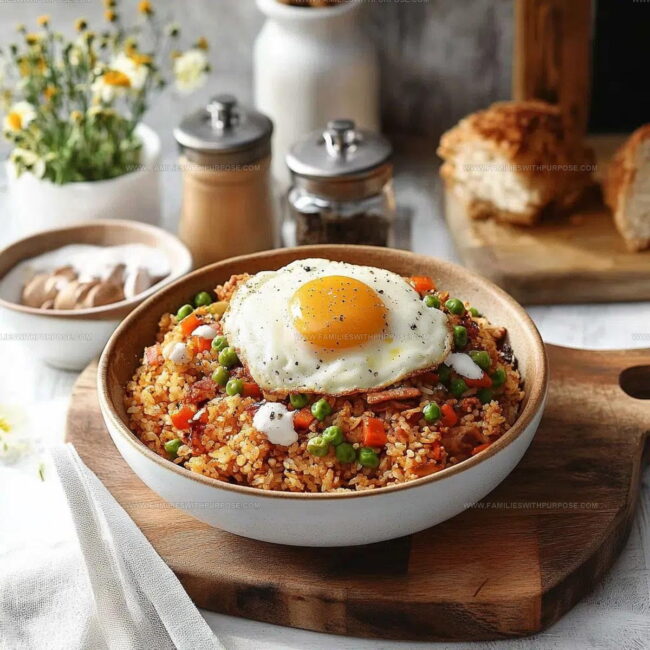
Ingredients That Bring Signature Spice To Gochujang Fried Rice
Rice Base:Spicy Sauce Components:Aromatics and Vegetables:Garnish and Topping:Equipment & Tools For Perfect Korean-Style Fried Rice
Easy Way to Make Gochujang Fried Rice
Prep Rice
Break apart your cold, day-old rice into individual grains, ensuring no large clumps remain. Cold rice works best for achieving that perfect fried rice texture.
Heat Sesame Oil
Pour 1 tablespoon sesame oil into a wok or large skillet over medium-high heat at 375°F. The oil should shimmer but not smoke.
Sauté Aromatics
Add 2 minced garlic cloves and 1 small diced onion to the hot oil. Stir continuously for 1-2 minutes until the onions become translucent and your kitchen fills with a fragrant aroma.
Cook Vegetables
Toss in your mixed vegetables with these ingredients:
Cook for 2-3 minutes until the vegetables start to soften.
Incorporate Rice
Add 4 cups of your prepped rice to the wok. Stir and toss to distribute the vegetables and prevent sticking.
Create Sauce
In a small bowl, whisk together:
Pour the sauce over your rice and stir thoroughly until each grain is coated with a vibrant red color.
Prepare Eggs
In a separate pan heated to 350°F, fry 4 eggs sunny-side up, keeping the yolks runny and golden.
Finish and Serve
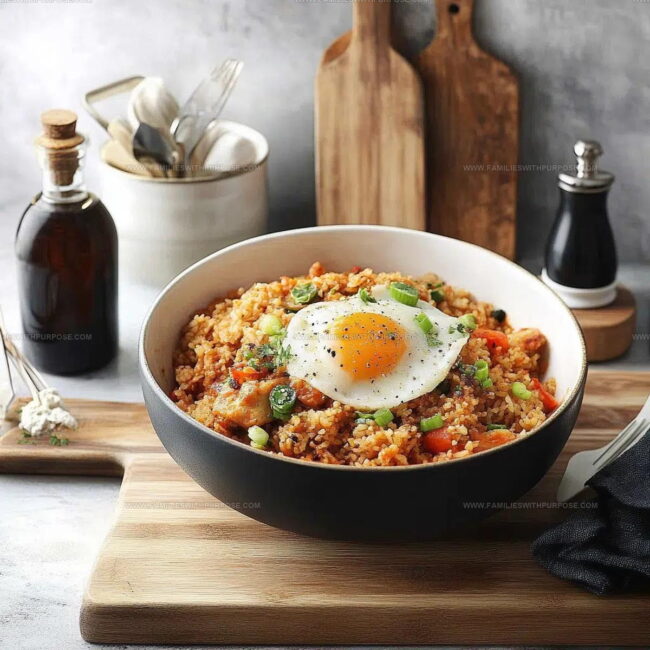
Transfer the spicy rice to serving bowls. Top each portion with a fried egg, sprinkle with 2 chopped green onions and a pinch of sesame seeds for extra flavor and crunch.
Pro Tips For Balanced Heat And Ideal Texture
Variations To Customize Your Gochujang Fried Rice
Serving Suggestions For A Spicy, Satisfying Rice Bowl
Storage Tips For Reheating Gochujang Fried Rice
Gochujang Fried Rice FAQs For Flavor Seekers
What makes gochujang so special in this fried rice?
Gochujang brings incredible depth with its sweet, spicy, and umami flavors that transform regular fried rice into something extraordinary.
Can vegetarians enjoy this recipe?
Absolutely! Replace eggs with tofu or additional vegetables to create a delicious plant-based version that still delivers amazing flavor.
How spicy will this fried rice turn out?
The heat depends on your gochujang brand. Start with less sauce and add more if desired – controlling spice level is totally in your hands.
Do specific rice types work best?
Jasmine or long-grain white rice work perfectly. Cold, day-old rice prevents mushiness and helps create those delightful crispy edges.
What if fresh vegetables aren’t available?
Frozen mixed vegetables are an excellent substitute. They cook quickly and still provide great texture and nutrition.
Can kids handle this spicy dish?
Reduce gochujang amount or use a milder variety. Kids often enjoy mild versions of exciting recipes when spice is carefully balanced.

Korean-Style Gochujang Fried Rice Recipe
- Total Time: 28 minutes
- Yield: 4 1x
Description
Korean Gochujang Fried Rice brings sizzling comfort straight from my kitchen to your plate. Spicy, savory goodness combines day-old rice with bold gochujang sauce for a quick meal that delivers serious flavor without complicated steps.
Ingredients
Primary Ingredients:
- 4 cups rice
- 4 eggs
- 2 tablespoons gochujang paste
- 1 cup mixed vegetables
- 1 cup kimchi
Supporting Ingredients:
- 1 small onion
- 2 garlic cloves
- 1 tablespoon soy sauce
- 1 tablespoon sesame oil
Garnish Ingredients:
- 2 green onions
- Sesame seeds
Instructions
- Pull refrigerated rice from container, gently separating each cold grain with fingertips so no dense clusters remain.
- Warm 15 milliliters (1 tablespoon) sesame oil in large cast-iron skillet over medium-high heat at 204°C (400°F) for 45 seconds.
- Mince 2 fresh garlic cloves and dice 1 small onion, then toss into hot oil. Sauté for 90 seconds until aromatics become translucent and fragrant.
- Tumble 240 milliliters (1 cup) mixed vegetables into skillet. Stir constantly for 2 minutes until vegetables soften slightly.
- Chop 240 milliliters (1 cup) kimchi into small pieces if using, then fold into vegetable mixture.
- Add 960 milliliters (4 cups) cold rice to skillet, spreading grains to create even layer across cooking surface.
- Whisk 30 milliliters (2 tablespoons) gochujang paste with 15 milliliters (1 tablespoon) soy sauce in small bowl until smooth.
- Pour sauce mixture over rice, using wooden spatula to distribute color and flavor across entire batch.
- Cook rice mixture for 4-5 minutes, stirring occasionally to prevent sticking and ensure uniform heating.
- Crack 4 eggs into separate skillet preheated to 176°C (350°F), cooking sunny-side up for 3 minutes.
- Transfer spicy rice to serving bowls, topping each portion with one crispy fried egg.
- Sprinkle chopped green onions and sesame seeds over finished dish for fresh garnish.
Notes
- Cold rice is crucial for preventing mushy texture and ensuring each grain stays separate during frying.
- Kimchi adds complex tangy flavor and authentic Korean character to the dish, so choose a high-quality brand.
- Gochujang varies in heat level, so taste and adjust the amount based on personal spice tolerance.
- Sesame oil provides deep, nutty undertones that elevate the entire fried rice experience, so use a good quality oil.
- Prep Time: 5 minutes
- Cook Time: 23 minutes
- Category: Stir-Fried
- Method: Frying
- Cuisine: Korean
Nutrition
- Serving Size: 4
- Calories: 390 kcal
- Sugar: 5 g
- Sodium: 700 mg
- Fat: 18 g
- Saturated Fat: 4 g
- Unsaturated Fat: 12 g
- Trans Fat: 0.1 g
- Carbohydrates: 45 g
- Fiber: 3 g
- Protein: 14 g
- Cholesterol: 185 mg
Sophie Lane
Recipe Developer
Expertise
Family-friendly Meals, Simple Healthy Cooking, Ingredient Substitutions, Beginner-friendly Recipes, Flexible Meal Prep
Education
- Program: Professional Cook Certificate
- Focus: Online culinary training covering knife skills, cooking techniques, and plant-based and modern cooking approaches.
Schoolcraft CollegeSophie brings a calm and flexible approach to Families With Purpose. Based in Fort Collins, Colorado, she creates recipes that feel simple, clear, and easy to make at home. She focuses on family-friendly meals, healthy everyday cooking, ingredient swaps, and beginner-friendly ideas. Sophie helps make each recipe approachable and easy to follow, especially for busy families who need meals that can bend with the day.