
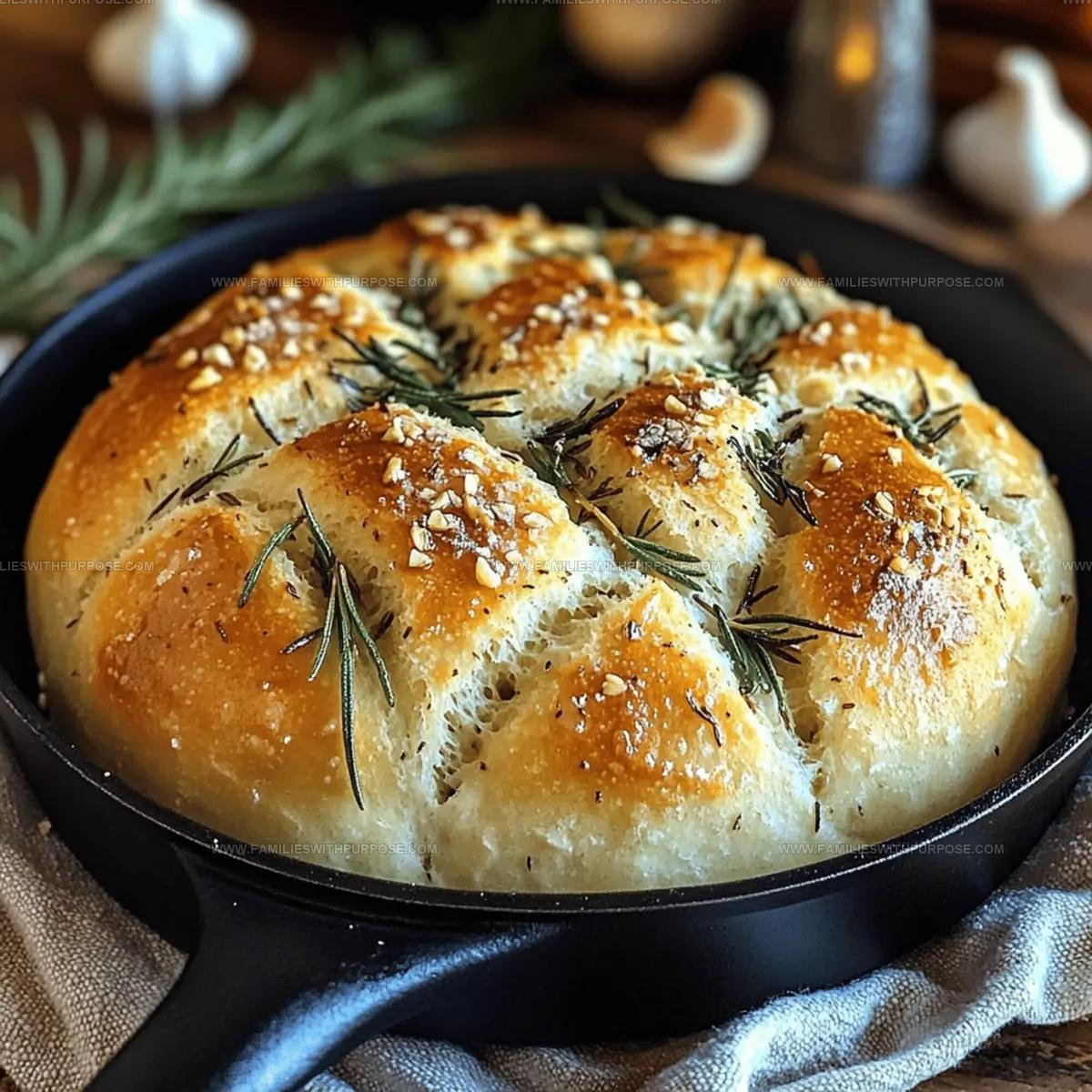
Garlic Rosemary Skillet Bread Recipe for Warm Family Dinners

Rustic garlic rosemary skillet bread recipe brings warmth and comfort to any table with minimal fuss and maximum flavor.
This bread combines aromatic herbs with savory notes in a way that feels both homey and impressive.
Whether serving it alongside soup, using it to mop up sauce, or enjoying it fresh from the pan, this bread fits countless occasions.
The skillet method creates a beautifully crisp exterior while keeping everything soft inside.
No special equipment or advanced baking skills are needed, making it accessible for anyone who loves fresh-baked goodness.
The aroma alone will have everyone gathering in the kitchen before it even finishes cooking.
When you pull that golden loaf from the skillet, the satisfaction is instant and undeniable.
Head to the full recipe below and watch how quickly it disappears.
Highlights That Make Garlic Rosemary Skillet Bread Special
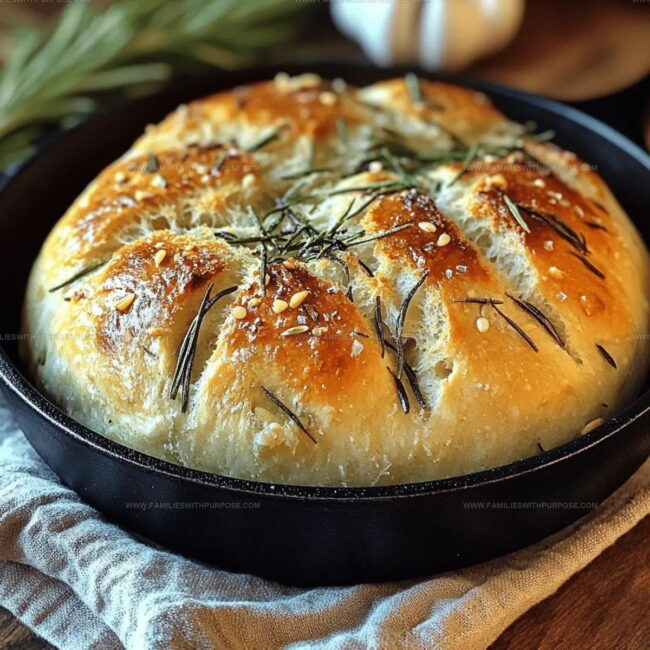
Everything You’ll Be Using for Rustic Garlic Rosemary Skillet Bread
Base Ingredients:Liquid Ingredients:Flavor Enhancers:Kitchen Tools in Use for Rustic Rosemary Skillet Bread
Rustic Garlic Rosemary Skillet Bread Instructions
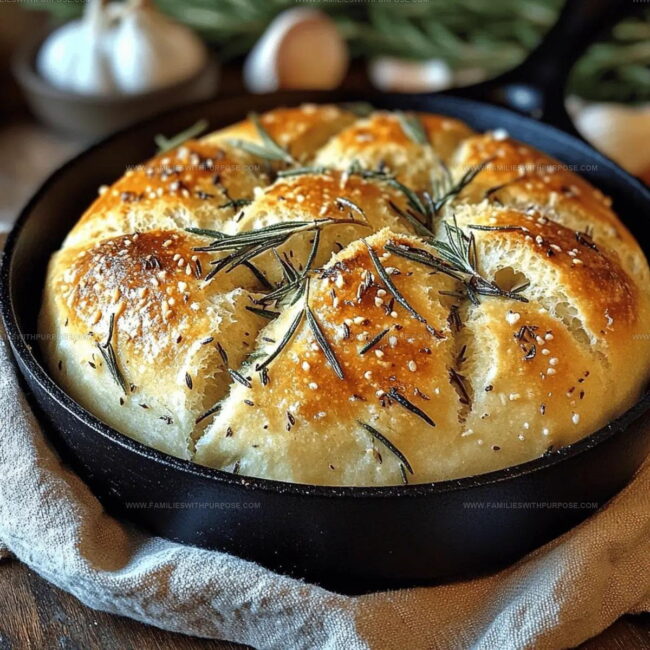
Combine Dry Ingredients
Grab a large mixing bowl and toss in 3 cups of flour. Then add these ingredients:
Whisk everything together until it’s well mixed.
Prepare Liquid Ingredients
Warm 1/4 cup olive oil and 1 cup water to exactly 125-130°F. Pour this warm liquid into the dry ingredients and stir until a soft dough starts to form.
Knead the Dough
Transfer the dough to a clean surface and knead for 8-10 minutes. Your goal is a smooth, elastic ball that feels soft and springy. If you have a stand mixer, use the dough hook and knead for about 2 minutes.
First Resting Period
Cover the dough and let it rest for 10 minutes. After resting, gently punch down the dough to release trapped air.
Prepare the Skillet
Grab a 10-inch cast iron skillet and coat it generously with olive oil. Place the dough right in the center and slice a criss-cross pattern on top.
Add Flavor Toppings
Brush the top with remaining olive oil. Sprinkle these delicious additions:
Second Rise
Let the dough rise for another hour in a warm spot. Meanwhile, preheat your oven to exactly 400°F.
Bake to Golden Perfection
Slide the skillet into the preheated oven and bake for 20-25 minutes. Look for a beautiful golden brown color and amazing aroma that fills your kitchen.
Guidance for Best Results with Garlic Rosemary Skillet Bread
Rustic Skillet Bread Flavor Add-Ins
Serving Overview for Garlic Rosemary Skillet Bread
Rustic Skillet Bread Storage Essentials
Rustic Garlic Rosemary Skillet Bread Recipe FAQ
Can I substitute the flour?
Bread flour gives the best texture, but all-purpose flour works perfectly fine for this focaccia.
Why add salt to the dough?
Salt enhances flavor and helps control yeast growth, creating a more balanced bread.
How do I know the dough is kneaded enough?
The dough should become smooth and form a nice ball without sticking to your hands.
What if my kitchen is cold?
Place the dough in a warm spot like near a heating vent or inside a turned-off oven with the light on to help it rise.
Can I add different herbs?
Absolutely! Thyme, oregano, and basil are fantastic alternatives to rosemary.
Do I need a special pan?
A cast iron skillet works best, but a regular baking sheet can work if you don’t have one.
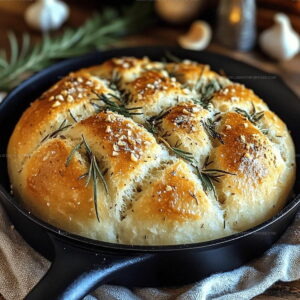
Rustic Garlic Rosemary Skillet Bread Recipe
- Total Time: 1 hour 40-47 minutes
- Yield: 8 1x
Description
Fresh garlic rosemary skillet bread emerges straight from the cast-iron pan, delivering warm comfort with crispy edges and aromatic herbs. Your kitchen will smell incredible while this simple yet delectable bread bakes to golden perfection.
Ingredients
Main Ingredients:
- 3 cups all-purpose flour
- 1 cup water
- ¼ cup olive oil
Supporting Ingredients:
- 3 cloves garlic
- 2 tablespoons fresh rosemary
Seasoning and Leavening:
- 1 tablespoon sugar
- 2 teaspoons rapid rise instant yeast
- 1 teaspoon sea salt
Instructions
- Combine 3 cups of all-purpose flour, 1 tablespoon sugar, 2 teaspoons rapid rise yeast, and ¾ teaspoon sea salt in a spacious mixing bowl. Blend the dry ingredients thoroughly to ensure even distribution.
- Warm ¼ cup olive oil and 1 cup water to exactly 125-130°F using a kitchen thermometer. Pour the heated liquid into the flour mixture and stir until a soft, shaggy dough forms.
- Knead the dough using a stand mixer with a dough hook for 2 minutes, or manually for 8-10 minutes. Your goal is a smooth, elastic ball that springs back when gently pressed.
- Allow the dough to rest, covered, for 10 minutes. After resting, press down firmly to release trapped air pockets.
- Generously coat a 10-inch cast iron skillet with olive oil. Transfer the dough to the center of the skillet and create a distinctive criss-cross pattern on the surface using a sharp knife.
- Drizzle the remaining olive oil across the dough. Scatter 3 minced garlic cloves and 2 tablespoons fresh rosemary over the surface. Sprinkle an extra pinch of sea salt for enhanced flavor.
- Let the dough rise, uncovered, in a warm spot for 60 minutes until it looks puffy and expanded. Meanwhile, position your oven rack in the center and preheat to 400°F.
- Slide the skillet into the preheated oven and bake for 20-25 minutes. Your focaccia is ready when the top turns a deep golden brown and releases an aromatic herbal fragrance.
Notes
- Work with warm liquid around 125-130°F to activate the yeast perfectly without killing it.
- Kneading develops gluten, so take time to work the dough until smooth and elastic, which creates better bread texture.
- Cast iron skillet gives amazing crispy edges and helps distribute heat evenly for consistent browning across the focaccia.
- When adding herbs and garlic, press them gently into the surface so they stick during baking and create delicious flavor pockets.
- Prep Time: 20-22 minutes
- Cook Time: 20-25 minutes
- Category: One-Skillet
- Method: Baking
- Cuisine: Italian
Nutrition
- Serving Size: 8
- Calories: 147 kcal
- Sugar: 1.0 g
- Sodium: 159 mg
- Fat: 5.3 g
- Saturated Fat: 0.7 g
- Unsaturated Fat: 4.6 g
- Trans Fat: 0.0 g
- Carbohydrates: 21.6 g
- Fiber: 1.2 g
- Protein: 3.9 g
- Cholesterol: 0 mg
Mason Carter
Founder
Expertise
Family Meal Routines, Simple One-pot Meals, Budget-friendly Cooking, Quick Dinner Planning, Batch Cooking Systems
Education
- Certificate: Culinary Arts
- Focus: Training in core cooking techniques, kitchen operations, and real food preparation through hands-on experience in professional-style kitchens.
Penn Foster Career School (Online)Mason is the founder of Families With Purpose and the heart behind its simple, family-focused recipes. Based in Greenville, South Carolina, he creates meals that fit into busy routines and bring people back to the table. He focuses on easy dinners, one-pot meals, budget-friendly cooking, and practical weekly meal planning. Mason has built a recipe collection shaped by real family life, with clear methods and repeatable meals that work on everyday schedules.