
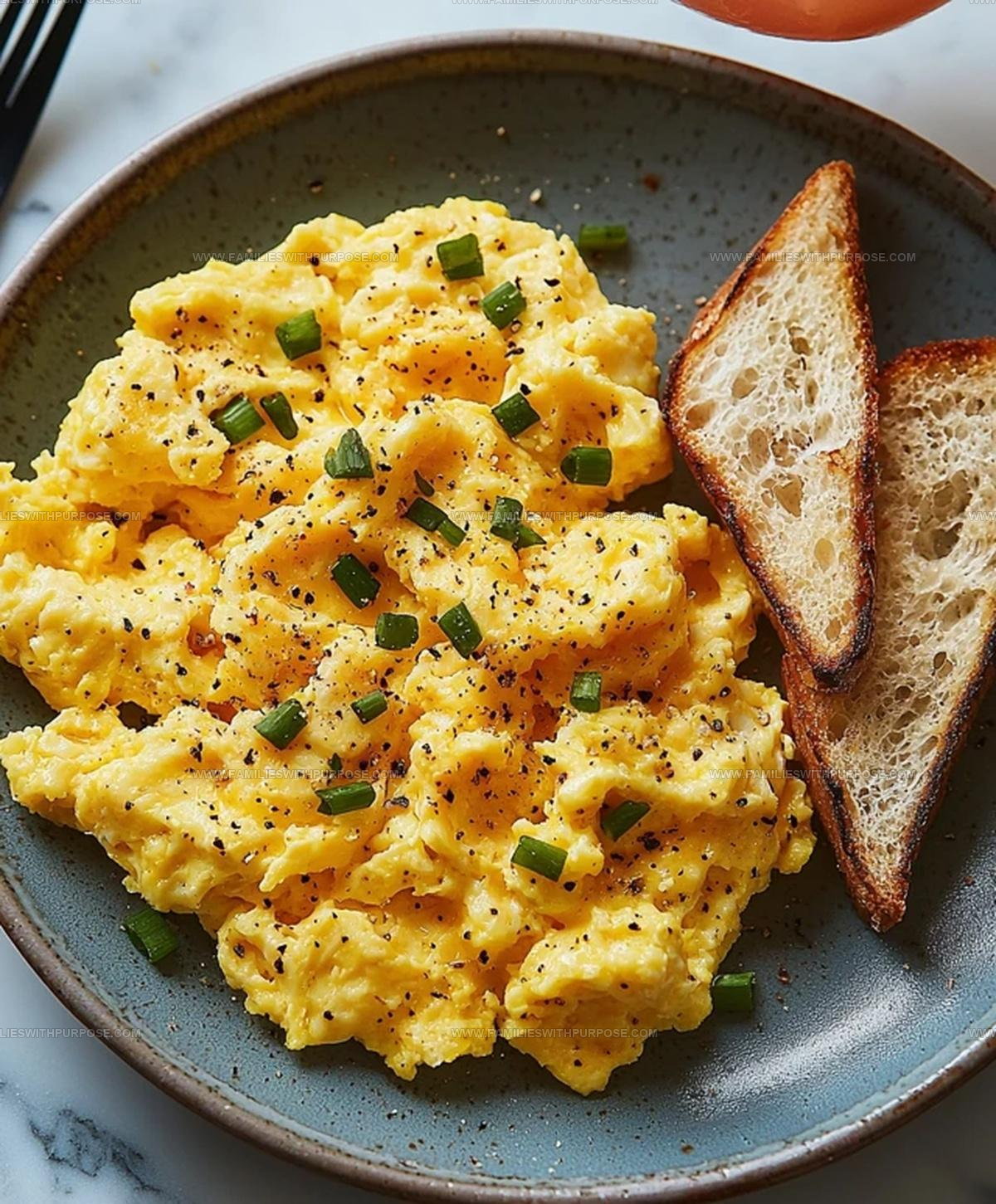
Simple Scrambled Eggs Recipe with Essential Cooking Tips

Scrambled eggs cooking tips can help anyone master what seems like simple breakfast fare but often ends up rubbery or watery instead of fluffy and creamy.
Most home cooks assume beating and heating are all it takes, yet temperature control and timing make all the difference between mediocre results and café-quality perfection.
Whether for a leisurely weekend brunch or a quick weekday meal, properly cooked scrambled eggs deliver satisfying protein that feels both comforting and nourishing.
Learning the right approach means saying goodbye to overcooked disappointment forever.
Once the proper method becomes second nature, breakfast confidence grows along with compliments from everyone at the table.
Success happens faster than expected when following proven advice that actually works.
What Makes Scrambled Egg Techniques Worth Knowing
What You’ll Need for Scrambled Eggs Cooking Tips
Core Ingredients:Seasoning Ingredients:Cooking And Finishing Ingredients:What Tools Help When Making Scrambled Eggs
How to Cook Perfect Scrambled Eggs Step by Step
Crack the Eggs
Grab 4 large eggs and tap them gently against the side of a medium bowl to crack them open. Drop the eggs inside, making sure no shell pieces sneak in.
Season the Eggs
Sprinkle in a pinch of salt and a dash of black pepper. If you’re feeling extra creamy, pour in 2 tablespoons of milk or cream. Whisk everything together until the mixture looks smooth and light, about 30 seconds of good whisking.
Prepare the Pan
Set a non-stick skillet on the stove at medium-low heat (around 300°F). Toss in 1 tablespoon of butter or olive oil, letting it melt and coat the bottom of the pan without turning brown.
Pour and Wait
Carefully pour your egg mixture into the warm pan. Listen for a gentle sizzle – that’s your cue that the temperature is just right. Let the eggs sit untouched for 10-15 seconds to form a base layer.
Gentle Stirring
Use a spatula to softly push the eggs from the edges toward the center. Keep the movement gentle – we’re not trying to chop them up, just create soft, creamy curds.
Watch the Texture
Continue stirring occasionally for 3-5 minutes. You’re looking for eggs that are mostly set but still have a slight glossy sheen. They should look just barely cooked.
Final Touches
Take the pan off the heat. If you want extra flavor, now’s the time to sprinkle in:
Give a quick taste and add more salt or pepper if needed.
Serve and Enjoy
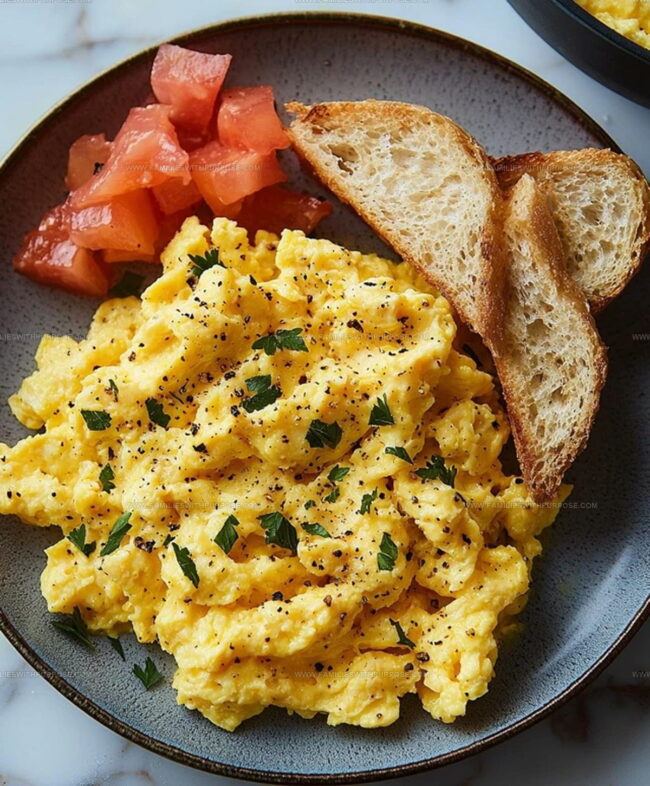
Slide those fluffy scrambled eggs onto a warm plate. Pair with crispy toast or your favorite breakfast sides. Dig in while they’re hot!
Best Tips for Perfect Scrambled Eggs
What Scrambled Egg Variations Change the Finish
Ways to Serve Scrambled Eggs Alongside Any Meal
How to Store Scrambled Eggs for Short-Term Use?
Q&A for Scrambled Eggs Cooking Tips
Can I use water instead of milk?
Water works, but milk or cream adds richness and helps create softer, more tender scrambled eggs.
What type of pan works best?
A non-stick skillet is perfect for preventing eggs from sticking and making cleanup easier.
How do I know when eggs are done cooking?
Look for a glossy, slightly wet appearance – they’ll continue cooking after removing from heat. Overcooking makes eggs dry and rubbery.
Should eggs be whisked before or after seasoning?
Whisk salt and pepper into eggs before cooking to distribute flavor evenly throughout the dish.
Can scrambled eggs be made ahead of time?
Eggs are best served immediately, but you can keep them warm in a low-temperature oven for short periods without losing quality.
Why use medium-low heat?
Low heat prevents eggs from burning or becoming tough, creating a creamy, soft texture that melts in your mouth.
Scrambled Eggs Cooking Tips Recipe
- Total Time: 6-10 minutes
- Yield: 2 1x
Description
Perfecting scrambled eggs becomes a breeze when you master these simple techniques that guarantee creamy, delicious results right in your own kitchen. Whisking gently, controlling heat, and removing eggs just before they fully set ensures a silky texture that will elevate your breakfast game.
Ingredients
Main Ingredients:
- 4 large eggs
- 1 tablespoon butter or olive oil
Supporting Ingredients:
- 2 tablespoons milk or cream
Seasoning and Garnish:
- Salt, to taste
- Freshly ground black pepper, to taste
- Chopped fresh herbs (like chives, parsley, or dill)
- Grated cheese (like cheddar or feta)
Instructions
- Crack 4 large eggs into a medium mixing bowl, releasing them smoothly from their shells.
- Pour 2 tablespoons of milk or cream into the bowl for extra silky texture.
- Sprinkle a pinch of salt and a dash of freshly ground black pepper over the eggs.
- Whisk the mixture vigorously for 30-45 seconds until the eggs become light and frothy.
- Heat a non-stick skillet over medium-low heat at approximately 300°F.
- Add 1 tablespoon of butter or olive oil, swirling to coat the pan’s surface completely.
- Wait until the butter melts and becomes slightly foamy, but does not brown.
- Gently pour the whisked egg mixture into the heated pan, listening for a soft sizzle.
- Let the eggs settle for 10-15 seconds to form an initial layer without stirring.
- Use a rubber spatula to softly push eggs from pan edges toward the center.
- Continue stirring and folding gently for 3-4 minutes at constant medium-low heat.
- Remove the skillet from heat when eggs look mostly set but remain slightly glossy and wet.
- Fold in 2 tablespoons of optional grated cheddar or feta cheese if desired.
- Taste and adjust seasoning with additional salt and pepper as needed.
- Garnish with 1 tablespoon of freshly chopped herbs like chives or parsley.
- Transfer to warm plates and serve immediately alongside toast or preferred sides.
Notes
- Use fresh eggs at room temperature for the best texture and even cooking.
- Whisk eggs thoroughly to incorporate air, creating lighter and fluffier scrambled eggs.
- Cook eggs on low heat to prevent overcooking and maintain a creamy, soft consistency.
- Experiment with different additions like cheese, herbs, or vegetables to customize the flavor profile and make the dish more interesting.
- Prep Time: 3-5 minutes
- Cook Time: 3-5 minutes
- Category: Sautéed
- Method: Sautéing
- Cuisine: American
Nutrition
- Serving Size: 2
- Calories: 250 kcal
- Sugar: 1 g
- Sodium: 350 mg
- Fat: 20 g
- Saturated Fat: 8 g
- Unsaturated Fat: 10 g
- Trans Fat: 0.5 g
- Carbohydrates: 2 g
- Fiber: 0 g
- Protein: 14 g
- Cholesterol: 370 mg
Mason Carter
Founder
Expertise
Family Meal Routines, Simple One-pot Meals, Budget-friendly Cooking, Quick Dinner Planning, Batch Cooking Systems
Education
- Certificate: Culinary Arts
- Focus: Training in core cooking techniques, kitchen operations, and real food preparation through hands-on experience in professional-style kitchens.
Penn Foster Career School (Online)Mason is the founder of Families With Purpose and the heart behind its simple, family-focused recipes. Based in Greenville, South Carolina, he creates meals that fit into busy routines and bring people back to the table. He focuses on easy dinners, one-pot meals, budget-friendly cooking, and practical weekly meal planning. Mason has built a recipe collection shaped by real family life, with clear methods and repeatable meals that work on everyday schedules.