
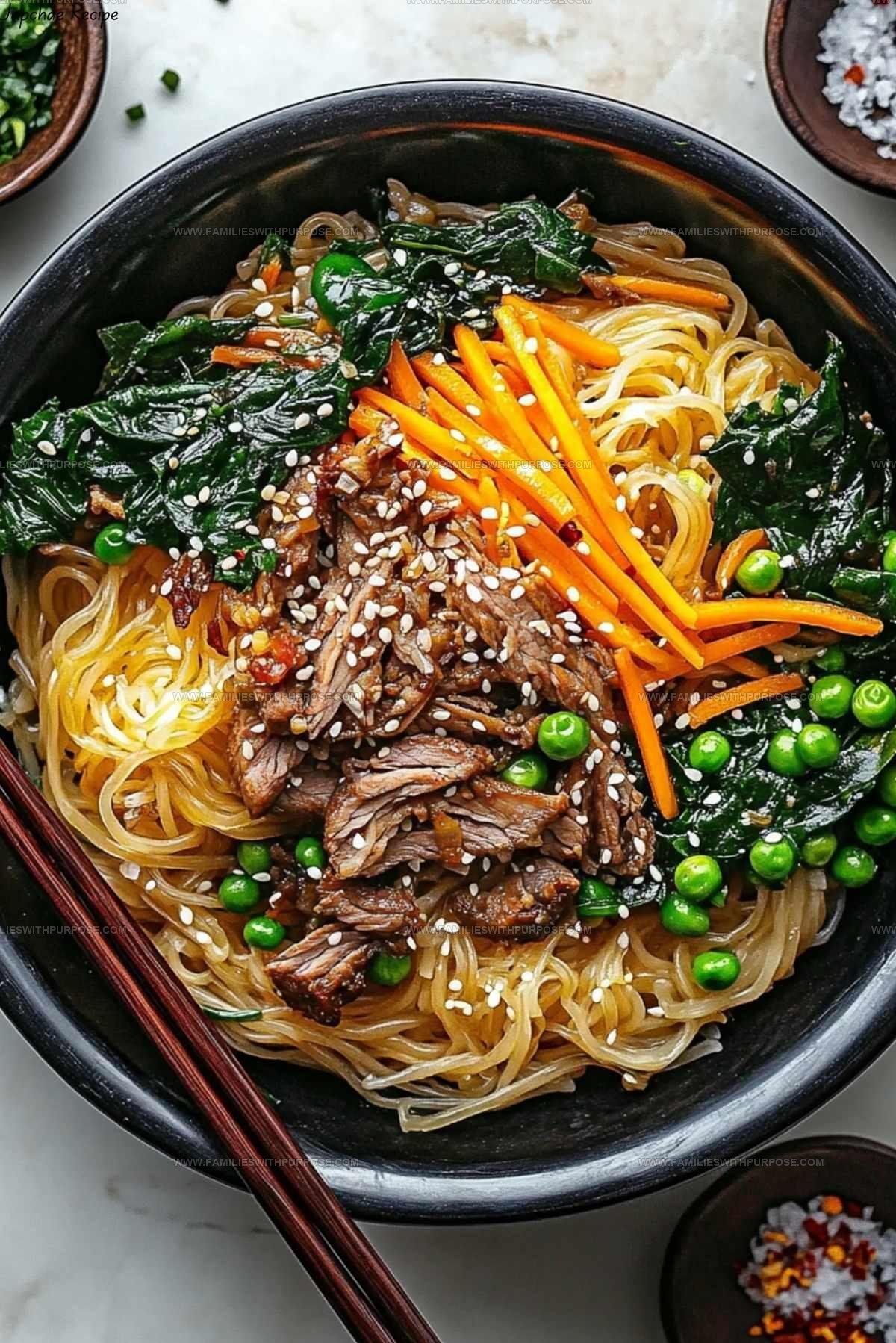
Korean Glass Noodle Japchae Recipe with Savory Vegetables

Korean japchae has earned its reputation as a beloved dish at celebrations and everyday meals.
Glass noodles shine in a savory-sweet combination that feels both comforting and special, making it perfect for potlucks, family dinners, or when you crave something satisfying.
The textures work beautifully together, offering a delightful contrast in every bite.
Colorful vegetables add visual appeal while keeping everything balanced and light.
You can serve it warm or at room temperature, which makes it incredibly convenient for meal prep or entertaining.
Whether you're new to Korean cuisine or already a fan, japchae delivers on flavor without overwhelming complexity.
Check out the full recipe below and see how simple it is to make at home.
Why Japchae Is a Must-Try Noodle Dish
What Ingredients Go Into Japchae
Main Proteins:Noodle Base:Vegetable Mix:Seasoning Blend:Tools for Sweet and Savory Japchae
Sweet and Savory Japchae Steps
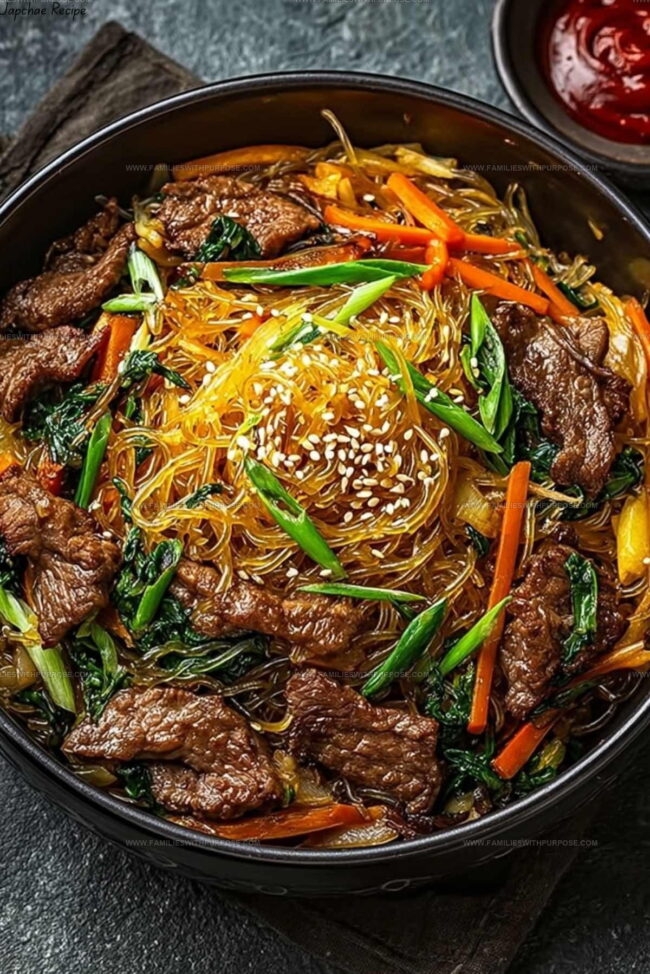
Prepare Noodles
Grab your Korean sweet potato noodles and cook them according to the package directions at a rolling boil. Once they’re perfectly tender, drain them and rinse with cold water to stop the cooking. Set aside.
Sear the Meat
Heat 1 tablespoon olive oil in a large skillet over medium-high heat at 375°F. Add 2 pounds of thinly sliced beef and cook until it’s nicely browned and cooked through.
Chop and Sauté Vegetables
Toss in the fresh vegetables and create a colorful mix:
Sauté these for about 4-5 minutes until they’re tender and fragrant.
Create the Sauce
Drizzle in the flavor-packed liquids to bring everything together:
Stir everything to coat the ingredients evenly.
Add Spinach and Combine
Toss in 1/2 pound of fresh spinach leaves and the cooked noodles. Gently mix everything until the spinach wilts and all ingredients are well combined.
Final Touch
Transfer the japchae to a serving dish. Sprinkle with extra chopped green onions if you’d like some extra freshness. Serve hot and enjoy your homemade Korean classic!
What Tips Balance Sweet and Savory Japchae
Which Japchae Variations to Try
Serving Ideas for Sweet and Savory Japchae
What Are the Best Ways to Store Sweet and Savory Japchae
Sweet and Savory Japchae Frequently Asked Questions
What are sweet potato noodles?
Sweet potato noodles are transparent, glassy noodles made from sweet potato starch, providing a unique chewy texture and are naturally gluten-free.
Can I make Japchae vegetarian?
Absolutely replace beef with tofu or additional vegetables like mushrooms to create a delicious vegetarian version.
How do I prevent noodles from sticking together?
Rinse noodles with cold water immediately after cooking and toss with a small amount of sesame oil to keep them separated.
What if I cannot find Korean ingredients?
Standard soy sauce and regular sesame oil work fine as substitutes for authentic Korean ingredients.
Are sweet potato noodles healthy?
These noodles are low in calories, gluten-free, and contain beneficial nutrients like potassium and vitamin C.
Can kids enjoy Japchae?
Children often love the sweet and savory flavors, and you can adjust spice levels to suit their preferences.
Sweet and Savory Japchae Recipe
- Total Time: 30 minutes
- Yield: 5 to 6 1x
Description
Korean japchae brings sweet and savory glass noodles dancing through a colorful veggie medley that makes dinner feel like a celebration. Grab your chopsticks and prepare for a delicious Korean classic that comes together faster than you can say “delicious”!
Ingredients
Proteins:
- 2 lb thin-sliced beef
Carbohydrates:
- 1 lb Korean sweet potato noodles
Vegetables and Seasonings:
- 3 medium carrots
- 1 large white onion
- ½ bunch green onions
- 6 garlic cloves
- ½ lb spinach leaves
- 4 tablespoons sesame oil
- 1 tablespoon olive oil
- 6 tablespoons soy sauce
- 3 tablespoons brown sugar
Instructions
- Gather all ingredients and slice 2 lb beef into thin strips. Julienne 3 medium carrots, thinly slice 1 large white onion, chop ½ bunch green onions, mince 6 garlic cloves, and wash ½ lb spinach leaves thoroughly.
- Boil 1 lb Korean sweet potato noodles in rapidly bubbling water for 6-7 minutes until translucent. Drain and rinse under cold water, then set aside.
- Heat 1 tbsp olive oil in a large skillet at medium-high heat (375°F). Sauté 2 lb beef strips for 4-5 minutes until golden brown and fully cooked.
- Add 3 medium julienned carrots, 1 large sliced onion, ½ bunch chopped green onions, and 6 minced garlic cloves to the skillet. Cook for 3-4 minutes until vegetables soften slightly.
- Incorporate 1 lb cooked noodles and ½ lb spinach leaves into the skillet. Pour 4 tbsp sesame oil, 6 tbsp soy sauce, and 3 tbsp brown sugar over the mixture.
- Toss everything together for 2-3 minutes, ensuring each noodle strand gets coated with sauce and ingredients are evenly distributed.
- Transfer the japchae to a serving platter. Sprinkle extra sesame seeds or chopped green onions on top for added flavor and visual appeal.
Notes
- Toast sesame seeds in a dry pan before sprinkling them on top for a deeper, nuttier flavor that really elevates the dish.
- When slicing beef, cut against the grain to ensure tender, easy-to-chew meat that melts in your mouth.
- For a vegetarian version, replace beef with tofu or mushrooms and use tamari instead of soy sauce to keep the recipe gluten-free.
- Let the noodles cool slightly before mixing to prevent them from becoming mushy and maintain their perfect chewy texture.
- Prep Time: 15 minutes
- Cook Time: 15 minutes
- Category: Sautéed
- Method: Sautéing
- Cuisine: Korean
Nutrition
- Serving Size: 5 to 6
- Calories: 410 kcal
- Sugar: 10 g
- Sodium: 900 mg
- Fat: 15 g
- Saturated Fat: 2 g
- Unsaturated Fat: 13 g
- Trans Fat: 0 g
- Carbohydrates: 45 g
- Fiber: 3 g
- Protein: 20 g
- Cholesterol: 50 mg
Sophie Lane
Recipe Developer
Expertise
Family-friendly Meals, Simple Healthy Cooking, Ingredient Substitutions, Beginner-friendly Recipes, Flexible Meal Prep
Education
- Program: Professional Cook Certificate
- Focus: Online culinary training covering knife skills, cooking techniques, and plant-based and modern cooking approaches.
Schoolcraft CollegeSophie brings a calm and flexible approach to Families With Purpose. Based in Fort Collins, Colorado, she creates recipes that feel simple, clear, and easy to make at home. She focuses on family-friendly meals, healthy everyday cooking, ingredient swaps, and beginner-friendly ideas. Sophie helps make each recipe approachable and easy to follow, especially for busy families who need meals that can bend with the day.