
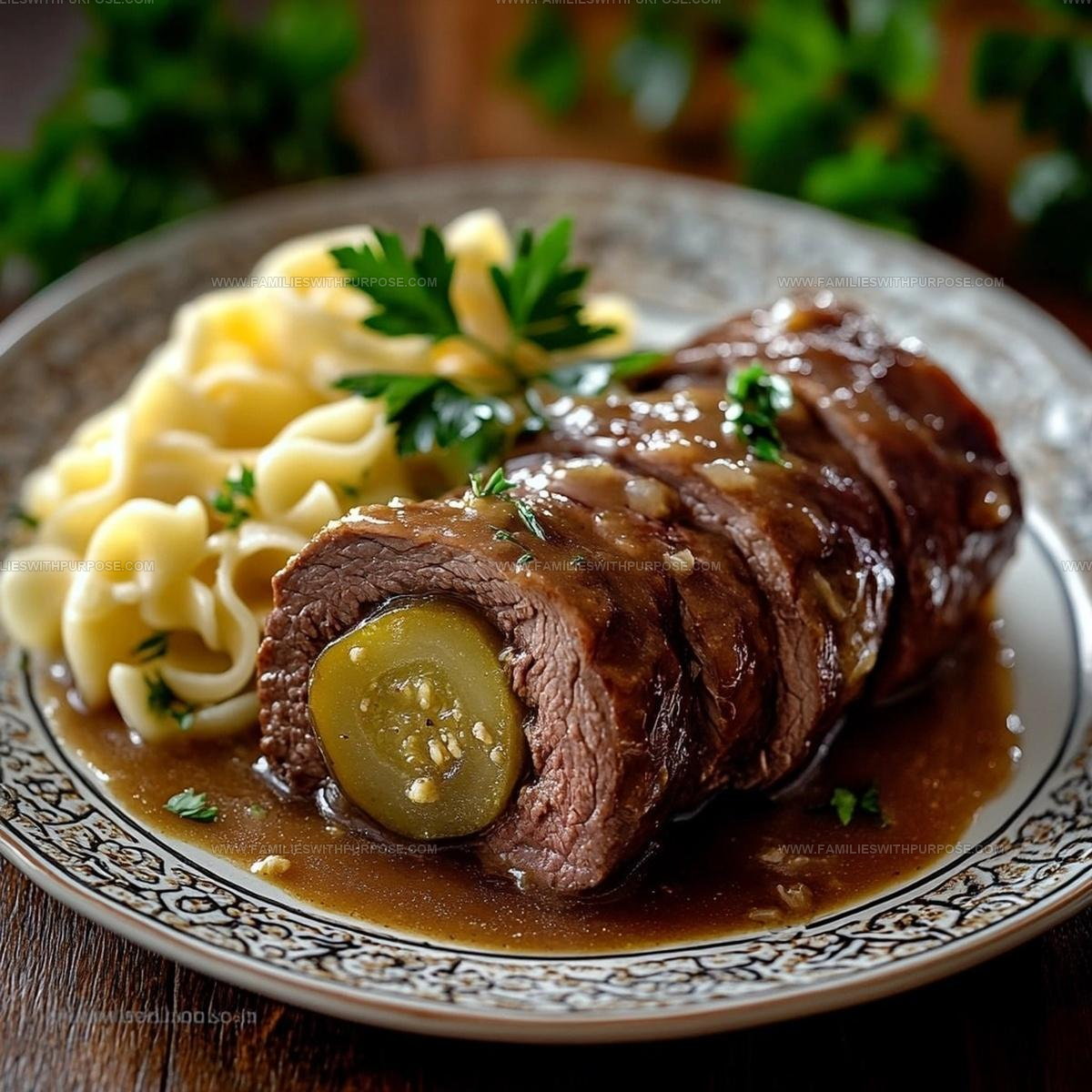
Classic German Rouladen Recipe With Tender Beef Rolls

Traditional German Rouladen Recipe brings generations of hearty European comfort food right to your dinner table with minimal fuss and maximum satisfaction.
This classic dish has been warming hearts across Germany for centuries, serving as a beloved Sunday meal that families gather around with anticipation.
Tender meat rolls filled with savory goodness create a meal that feels both elegant and wonderfully homey at the same time.
Cold weather months call for substantial dinners that stick to the ribs, and few dishes deliver quite like this one.
Whether hosting a special occasion or simply craving something more substantial than weeknight fare, the results always impress without requiring professional cooking skills.
Home cooks across the world have embraced this German favorite because it looks fancy but comes together more easily than expected.
The rich flavors and satisfying textures make every bite worth the effort, proving why this dish has remained popular for so long.
Once you taste authentic German comfort on a plate, regular dinners may never feel quite the same again.
What Sets German Rouladen Apart
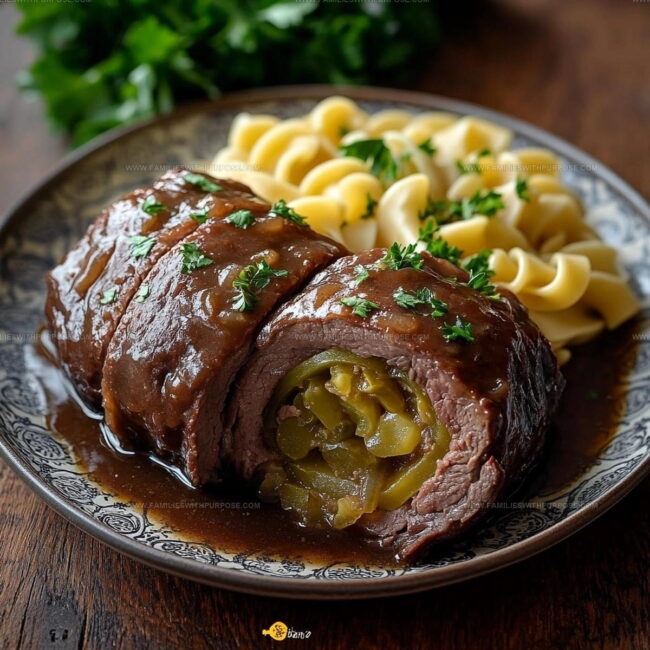
What Goes Into German Rouladen
Main Protein:Filling Ingredients:Seasoning and Binding:Cooking Liquid:Gravy Ingredients:Garnish:Cooking Fat:Tools Needed for German Rouladen
German Rouladen Cooking Process
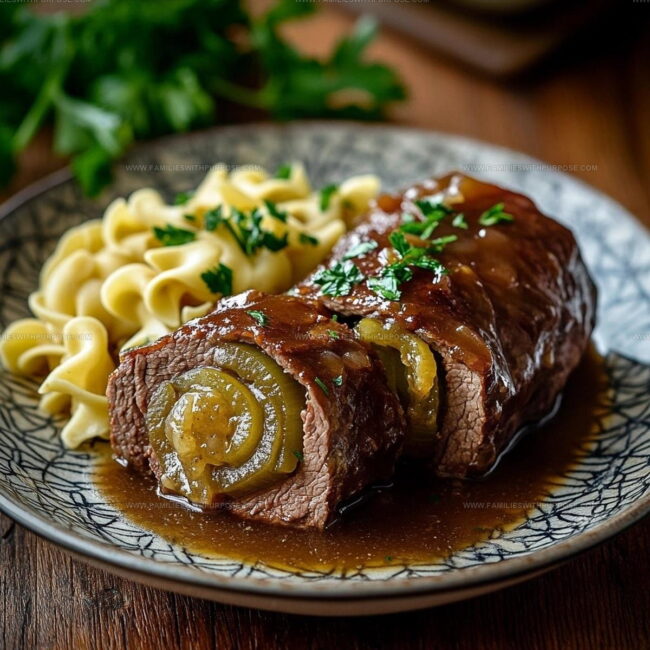
Prepare the Beef
Take those 4 slices of beef and lay them out on your cutting board. If they seem a bit uneven, grab a meat mallet and gently tap them to make them about ¼ inch thick. This helps everything cook evenly.
Layer on the Flavors
Time to build some serious flavor. Grab your jar of mustard and spread 1 tablespoon across each beef slice. Then add your toppings:
Create Tight Rolls
Roll each beef slice like a cozy burrito. Tuck in the sides as you go to keep all those delicious fillings inside. Use toothpicks or kitchen twine to hold everything together securely.
Brown the Rolls
Heat 2 tablespoons of olive oil in a Dutch oven at medium-high heat (around 375°F). Carefully place each roll in the pot and brown them for 5-7 minutes, turning to get a nice color on all sides. Once browned, set them aside.
Make the Gravy Base
Melt 2 tablespoons of butter in the same pot. Sprinkle in 2 tablespoons of flour and whisk to create a smooth roux. Slowly pour in 2 cups of beef broth and ½ cup of red wine, scraping up all those tasty brown bits from the bottom of the pan.
Slow Cooking Magic
Return the beef rolls to the pot. Cover and let everything simmer at 325°F for about 1.5 hours. This low and slow method makes the meat super tender.
Serve and Enjoy
Carefully remove the toothpicks or twine from the rolls. Plate them up and drizzle with the rich gravy. Sprinkle some chopped fresh parsley on top for a pop of color. Season with salt and pepper to taste.
Practical Notes for German Rouladen
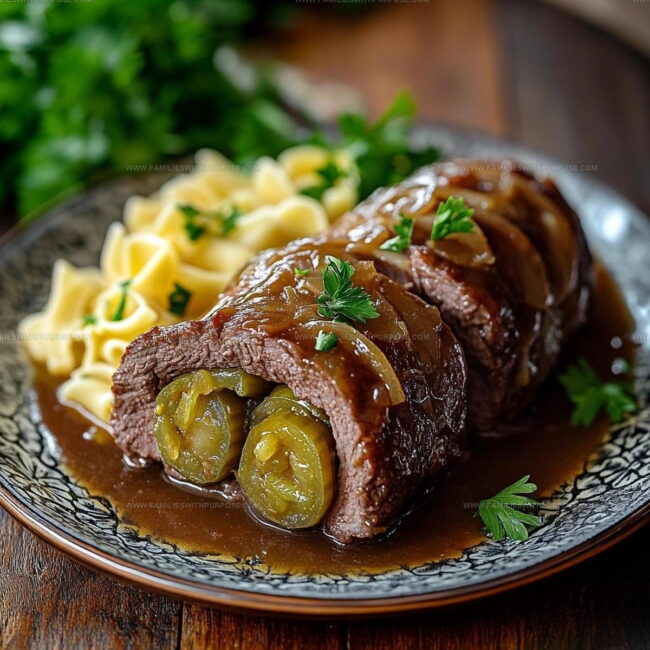
German Rouladen Filling Variations
How to Serve German Rouladen
German Rouladen Storage Guide
German Rouladen Reader Questions
Why do I need to pound the beef?
Pounding helps the meat become tender and ensures even cooking, so each bite is consistently delicious.
Can I swap out any ingredients?
Bacon can be replaced with ham, and pickles work best when they’re crisp dill pickles for maximum flavor.
What if my rouladen falls apart while rolling?
Secure each roll tightly with toothpicks or kitchen twine to keep the filling inside during cooking.
How do I know when the rouladen are done?
The meat should be fork-tender and easily pull apart when gently tested after simmering.
What’s the best cut of beef for this recipe?
Choose top round or sirloin tip – lean cuts that become wonderfully tender with slow cooking.
Can I make this dish ahead of time?
Absolutely! Rouladen taste even better when prepared a day in advance and reheated gently.
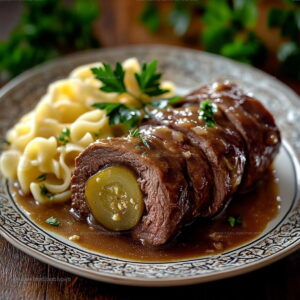
Traditional German Rouladen Recipe
- Total Time: 2 hours
- Yield: 4 1x
Description
German Rouladen wraps tender beef around pickles and bacon, creating a hearty comfort meal that brings German countryside traditions right to your dinner table. Rolled, seasoned, and braised to perfection, this classic dish delivers rich flavors that connect generations of home cooking.
Ingredients
Proteins:
- 4 large slices beef (top round or flank steak)
- 4 slices bacon
Vegetables and Seasonings:
- 1 large onion
- 4 dill pickles
- 4 tablespoons German or Dijon mustard
- Salt and pepper
Liquids and Thickeners:
- 2 tablespoons olive oil
- 2 cups beef broth
- ½ cup dry red wine
- 2 tablespoons all-purpose flour
- 2 tablespoons butter
- Fresh parsley
Instructions
- Grab 4 large beef slices and lay them flat on your cutting board. Gently pound each slice to an even ¼-inch thickness using a meat mallet.
- Spread 1 tablespoon of German mustard across each beef slice, covering the entire surface evenly.
- Layer 1 slice of bacon, a few thin onion strips, and half a dill pickle lengthwise on top of the mustard-covered beef.
- Roll each beef slice tightly, tucking in the sides to create a compact bundle. Secure with 2-3 toothpicks or kitchen twine.
- Heat 2 tablespoons olive oil in a Dutch oven at medium-high heat (375°F). Brown each rouladen roll for 5-6 minutes, turning to create a deep golden crust on all sides.
- Remove rolls and set aside. Add 2 tablespoons butter to the same pot and melt completely.
- Sprinkle 2 tablespoons flour into the melted butter, whisking continuously for 2 minutes to create a smooth roux.
- Slowly pour 2 cups beef broth and ½ cup red wine into the pot, scraping up any browned bits from the bottom. Stir until the mixture thickens.
- Return the beef rolls to the pot. Reduce heat to low (250°F), cover, and simmer for 90 minutes until the meat becomes fork-tender.
- Carefully remove toothpicks or twine. Plate the rouladen and drizzle with the rich gravy. Garnish with fresh chopped parsley before serving.
Notes
- Choose beef that’s thin and wide, like top round or flank steak, which makes rolling easier and ensures tender results.
- Pound meat gently between plastic wrap to prevent tearing and achieve uniform thickness for consistent cooking.
- Toothpicks can burn during cooking, so opt for kitchen twine which handles heat better and releases more smoothly.
- For a gluten-free version, swap wheat flour with cornstarch or rice flour in the gravy, and ensure your broth is certified gluten-free.
- Prep Time: 15 minutes
- Cook Time: 1 hour 45 minutes
- Category: Sautéed
- Method: Sautéing
- Cuisine: German
Nutrition
- Serving Size: 4
- Calories: 365 kcal
- Sugar: 2 g
- Sodium: 550 mg
- Fat: 25 g
- Saturated Fat: 7 g
- Unsaturated Fat: 16 g
- Trans Fat: 0.3 g
- Carbohydrates: 8 g
- Fiber: 1.5 g
- Protein: 28 g
- Cholesterol: 80 mg
Mason Carter
Founder
Expertise
Family Meal Routines, Simple One-pot Meals, Budget-friendly Cooking, Quick Dinner Planning, Batch Cooking Systems
Education
- Certificate: Culinary Arts
- Focus: Training in core cooking techniques, kitchen operations, and real food preparation through hands-on experience in professional-style kitchens.
Penn Foster Career School (Online)Mason is the founder of Families With Purpose and the heart behind its simple, family-focused recipes. Based in Greenville, South Carolina, he creates meals that fit into busy routines and bring people back to the table. He focuses on easy dinners, one-pot meals, budget-friendly cooking, and practical weekly meal planning. Mason has built a recipe collection shaped by real family life, with clear methods and repeatable meals that work on everyday schedules.